
Fiberglass Mat: Emulsion-Bonded vs Powder-Bonded
What Is Fiberglass Mat?
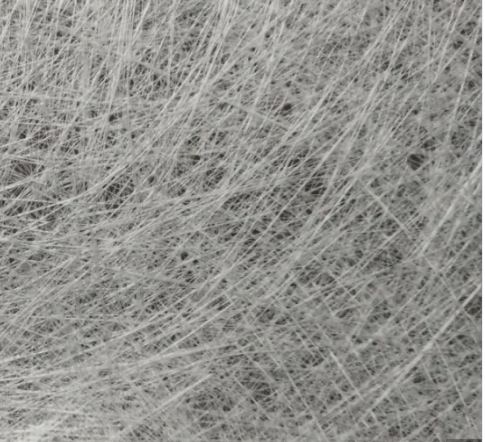
Fiberglass mat is a non-woven reinforcement made from short, randomly oriented glass strands held together by a binder. Because the fibers have no set direction, mat provides equal (isotropic) strength in every direction and is ideal for hand lay-up molding.
Emulsion-Bonded vs Powder-Bonded
Emulsion-Bonded Mat (EMAT)
The binder is applied as a liquid emulsion, giving the mat a more flexible texture that conforms easily to complex mold shapes — often preferred for hand lay-up with intricate geometry.
Powder-Bonded Mat (MAT)
The binder is a dry powder resin, giving a stiffer, more brittle texture — but offering faster wet-out and lower resin consumption, a cost advantage on flat or gently curved surfaces.
Applications
Fiberglass mat is used in general FRP part manufacturing, composite repair work, industrial furnace and boiler room insulation, automotive engine-bay insulation, and marine pipe/wall insulation.
Frequently Asked Questions
Is mat or woven fabric stronger?+
At the same weight, woven fabric is stronger in its fiber direction because its fibers are aligned. Mat is more practical when equal strength in every direction or easy draping over complex molds matters more.
Which mat is better for hand lay-up?+
Emulsion-bonded (EMAT) mat is generally preferred for hand lay-up thanks to its flexibility around complex mold corners.
Related Products
Related Articles
Fiberglass Woven Fabric: Choosing the Right Weight (gsm)
How fiberglass woven fabric differs from mat, how to pick the right weight from 200 to 800 g/m², and where it's used in composite manufacturing.
Emulsion Bonded Mat (EMAT): Flexible Mat for Hand Lay-Up
Why emulsion-bonded mat's flexible texture makes it a preferred choice for hand lay-up on complex mold shapes.
Powder Bonded Mat (MAT): Fast Wet-Out, Lower Resin Use
Why powder-bonded mat's fast wet-out and low resin consumption make it economical for flat composite panels.