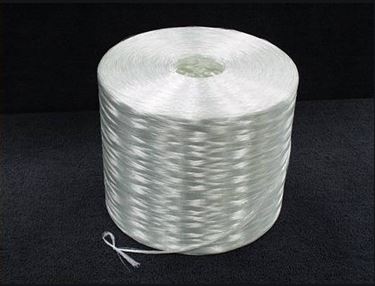
Fiberglass Roving: Single-End vs Multi-End Explained
What Is Fiberglass Roving?
Fiberglass roving is a bundle of continuous, untwisted glass filaments drawn from molten glass through micro-fine bushings. Because the fibers run continuously rather than being chopped, roving delivers high directional strength along its length.
Single-End vs Multi-End Roving
Single-End Roving
Fed from a single strand, designed for continuous, one-directional pulling processes like filament winding and pultrusion — ideal for pipe, tank and profile production where consistent tension matters.
Multi-End Roving
Made from multiple filament strands that separate easily, designed for chopper guns and woven-fabric feeding, where fast, even separation during processing is the priority.
Applications
Fiberglass roving is the primary raw material for filament-wound pipes and tanks, pultruded profiles, woven fabric production, and chopped-strand reinforcement processes.
Frequently Asked Questions
Is roving the same as yarn?+
Close, but not identical. Roving is an untwisted parallel filament bundle; yarn is typically twisted for added strength and better weaving compatibility.
Which roving type feeds a weaving loom?+
Single-end rovings specifically sized for weaving are used — their sizing is engineered to handle the loom's friction and tension without breaking.